Jamaicans guard our food traditions zealously. Just look what happens if someone uses the wrong beans in the rice and peas dish, or try to pass off unseasoned chicken as jerk. But many of the dishes we claim as authentically Jamaican have global origins that challenge our understanding of what it means to be "authentically Jamaican."
This exploration is especially relevant as we examine the complex phenomenon of colourism within the black Jamaican community. On TikTok, debates rage daily on who is allowed to label themselves as "Jamaican", by critics within and outside of the country. Despite the disdain for the use of "Out of Many, One People" to justify the presence of multiple skin tones, these discussions often overlook how much of Jamaica's culture, food included, is a product of cross-cultural blending, revealing that Jamaican identity, much like its cuisine, thrives in hybridity.
1. Escoveitch Fish and Jewish Roots
Escoveitch fish is quintessentially Jamaican, its tangy, spicy flavour a staple of Sunday dinners and beachside gatherings. But its origin lies with Jewish immigrants, who brought the tradition of escabeche, a method of pickling fish in vinegar and spices, which evolved into Jamaica’s beloved escoveitch.
2. Jamaican Patties and the Cornish Pasties of England
The flaky, golden Jamaican patty is a lunchtime favourite, but its roots trace back to the Cornish pasty, a meat-filled pastry introduced by British colonisers. Over time, Jamaicans added their flair, like spices, Scotch bonnet peppers, and turmeric-dyed dough, transforming it into the spicy delicacy we know today. The patty’s journey from British kitchens to Jamaican street corners is a story of adaptation, one that mirrors the island’s ability to take foreign elements and make them distinctly Jamaican.
Learn how India and China also contributed to the evolution of the patty recipe here:
 Laurel Wong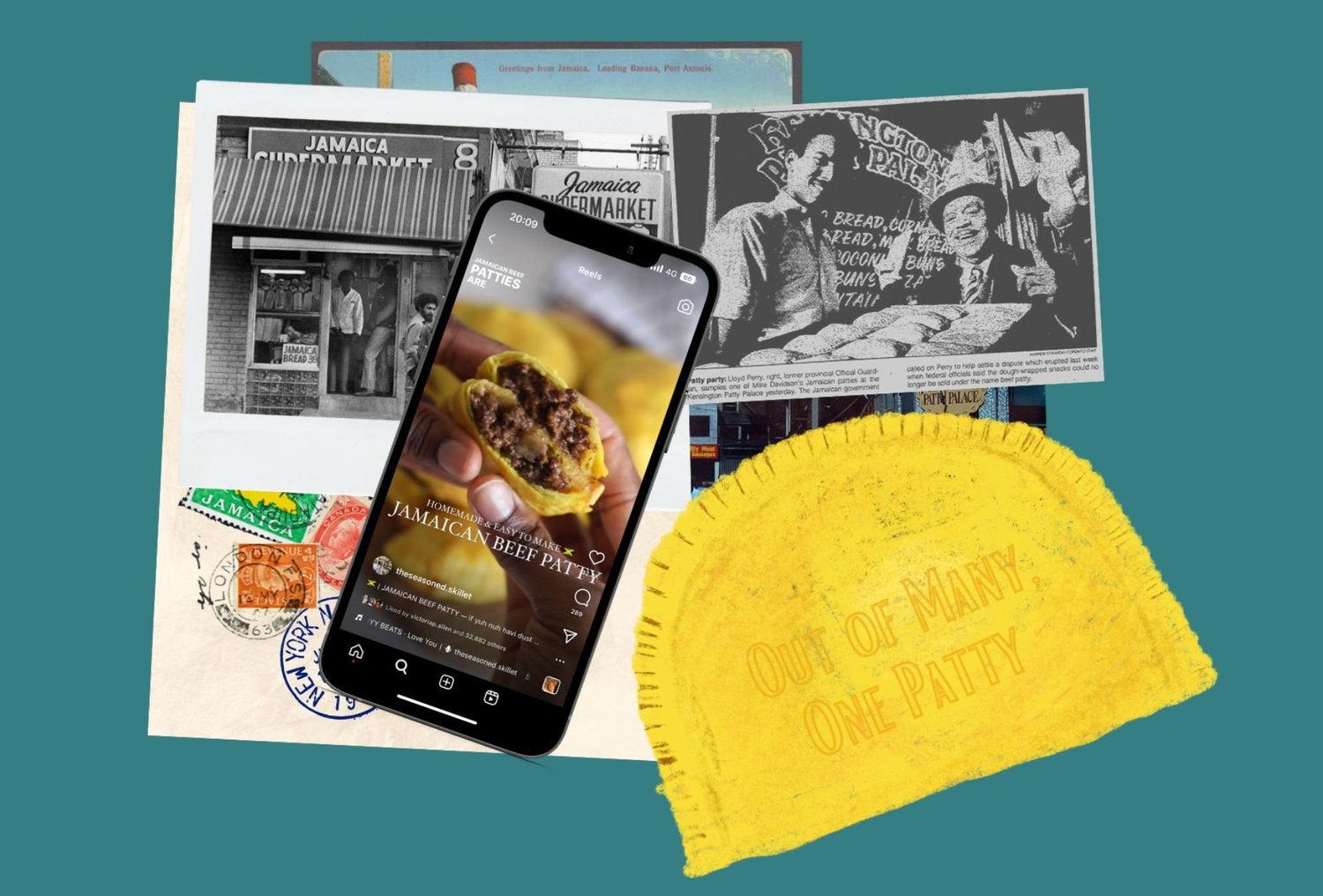
3. Bammy and Indigenous Innovation
Bammy, the cassava flatbread beloved as a side dish for fried fish, originates with the indigenous Taíno people, who were the island’s first inhabitants. Long before enslaved Africans arrived in Jamaica, the Taíno cultivated cassava and developed techniques to extract its toxic properties. Bammy is a living connection to the island’s pre-colonial heritage, reminding us that Jamaica’s history predates the African diaspora and European colonization.
4. Ackee and Saltfish: West African Meets Colonial Necessity
Jamaica’s national dish is a culinary paradox. Ackee, brought to Jamaica from West Africa in the 18th century, became a staple because of its availability and versatility. Saltfish, on the other hand, reflects the colonial economy: cheap, salted cod from the North Atlantic was imported to feed enslaved Africans. The pairing of these ingredients is a testament to survival and ingenuity, where two disparate worlds collided to create something uniquely Jamaican.
5. Jerk and the Maroon Connection to Amerindian Techniques
Jerk chicken and pork are perhaps Jamaica’s most famous culinary exports, but their origins lie with the Maroons, enslaved Africans who escaped plantations and formed independent communities in the island’s interior. The Maroons adopted the slow-cooking techniques of the Taíno people, smoking meat over pimento wood and seasoning it with spices and Scotch bonnet peppers.
Food as a Mirror of Identity
Exploring the origins of Jamaican food demonstrated that our identity is not a monolith. Jamaica is a mosaic of indigenous, African, European and Asian influences that have mingled and evolved over centuries. This hybridity challenges narrow definitions of authenticity, including those tied to skin colour or ancestry.
Just as we embrace the diverse origins of our food, we must also recognise that our people, regardless of complexion, are products of a shared history. Jamaica’s strength lies in its ability to blend and adapt, creating a culture that is greater than the sum of its parts.